
Builds
Bellwright Best Armor Guide
Learn the best armor choices in Bellwright, from medium midgame gear to heavy plate setups for harder battles and frontline survival.
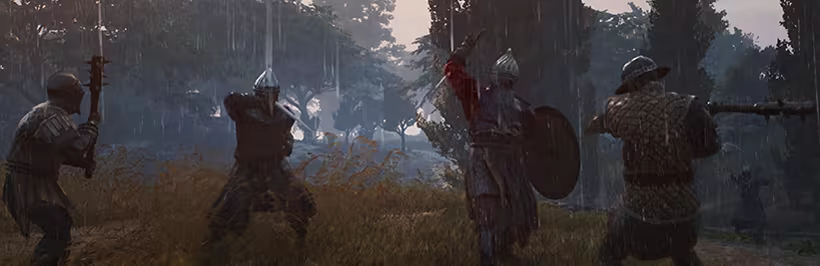
# Bellwright Best Armor Guide: How to Gear Up for Harder Battles
The best armor in Bellwright is not always the single heaviest item you can equip. Strong armor helps you survive arrows, brigand charges, shield-line brawls, and messy village liberation fights, but every piece also affects how your character moves, how your villagers perform, and how quickly your settlement can replace losses. A good armor plan balances protection, Strength requirements, movement speed, crafting cost, and battlefield role.
This Bellwright armor guide focuses on one goal: helping you gear yourself and your villagers for tougher battles. That means choosing when to stay mobile, when to commit to heavy armor, which slots deserve upgrades first, and how to prepare before you walk into bandit camps, reclamation parties, and larger faction fights.
Best Armor Overall
For the toughest frontline fighting, the best armor setup is a heavy Tier 3 plate-focused set on characters with enough Strength to wear it properly. A late-game tank build should prioritize a high-armor torso, helmet, leg armor, gloves, and boots, with the Knight Plate Cuirass standing out as one of the strongest torso choices thanks to its very high armor rating. It is not a casual exploration piece, though. It comes with a major movement penalty and requires high Strength, so it belongs on your player character or your best melee troops rather than on every worker in town.
For most players, the practical answer is this:
- **Best endgame tank armor:** Tier 3 heavy plate pieces, especially a high-armor torso such as Knight Plate Cuirass.
- **Best all-round armor:** Medium armor with a solid torso and helmet, because it protects without making you painfully slow.
- **Best villager army armor:** A mix of heavy armor for shield infantry and medium armor for archers, flankers, and lower-Strength recruits.
- **Best early armor plan:** Upgrade torso and helmet first, then fill boots, gloves, and legs as your materials allow.
Do not judge armor only by the biggest number. If a fighter becomes too slow to close distance, reposition, retreat, or chase archers, that armor can create new problems. Heavy armor is strongest when it supports a clear battlefield job.
How Armor Works in Practice
Bellwright armor pieces mainly matter in five ways:
1. **Armor value** reduces incoming damage. 2. **Slot coverage** decides which body areas are protected. 3. **Movement speed penalty** makes heavier sets slower. 4. **Strength requirement** limits who can wear better gear. 5. **Crafting cost and availability** decide whether you can outfit one hero or an entire squad.
The most important slots are usually **torso** and **head**. Chest pieces tend to provide the largest single armor boost, while helmets help protect against dangerous hits to the head. Legs, boots, and gloves still matter, but if you are short on resources, do not spread materials thin across low-impact pieces before your frontliners have proper chest armor and helmets.
Strength is also a major part of armor planning. Many medium and heavy pieces require a minimum Strength score. Strength also helps reduce the impact of movement penalties, which means high-Strength fighters are naturally better heavy armor users. Low-Strength villagers should not be forced into gear they can barely use. Give them lighter equipment, safer jobs, or time to train.
For broader survival basics before you start mass-producing equipment, the [Bellwright early game guide](/guides/bellwright-early-game-guide/) is a useful next read.
Early Game Armor: Survive Without Wasting Materials
In the early game, your best armor is whatever keeps you alive without draining the materials you need for tools, weapons, buildings, and recruitment. You are not trying to build a perfect army yet. You are trying to stop wolves, bandits, and unlucky ambushes from ending a run.
Early priorities:
- Craft or loot a basic torso piece as soon as possible.
- Add a helmet before taking repeated human fights.
- Give your main melee villager better gear before workers who rarely fight.
- Avoid putting heavy pieces on weak recruits if the speed penalty makes them useless.
- Repair and reuse looted gear when possible.
A common mistake is trying to armor everyone equally. In Bellwright, your first real combat squad is usually small, so gear your best fighters first. One sturdy melee companion with a shield, helmet, and chest armor is more valuable than five villagers wearing random scraps with poor weapons.
If you are still learning how to build the settlement economy that supports armor crafting, use the [base building guide](/guides/bellwright-base-building-guide/) and [crafting guide](/guides/bellwright-crafting-guide/) alongside this armor plan.
Midgame Armor: Medium Armor Becomes the Workhorse
Medium armor is the safest recommendation for most midgame players. It offers a good balance between survivability and movement, and it is easier to place on a wider range of recruits than the heaviest plate gear. Medium armor is especially good for fighters who need to move: archers, skirmishers, patrol guards, and the player when exploring unknown areas.
A strong medium setup should include:
- A solid medium torso, such as a reinforced gambeson-style piece.
- A helmet with meaningful armor value.
- Boots that do not slow the unit too much.
- Gloves and leg armor as finishing upgrades.
- A shield for melee units who are expected to hold pressure.
The reason medium armor feels so good is that Bellwright battles often involve movement. You may need to pull enemies away from a camp, rotate around trees, close distance on archers, or retreat when a villager goes down. A fully armored but slow fighter can survive the first exchange and still lose the fight because they cannot control positioning.
For this stage of progression, think in terms of roles. Your player character can wear the best set you can afford. Your main shield troops should wear the best torso and helmet available. Your archers should stay mobile enough to keep distance and reposition. Your workers should wear basic protection only if they are likely to be attacked.
Late Game Armor: When Heavy Plate Is Worth It
Heavy armor becomes worth the cost when enemies hit hard enough that medium gear no longer gives your front line enough staying power. This is especially true for larger bandit camps, reclamation parties, and liberation fights where your troops may be taking arrows and melee pressure at the same time.
Heavy armor is best on:
- Your player character when leading dangerous fights.
- Shield infantry who hold the front line.
- High-Strength villagers with melee traits or good combat stats.
- Units assigned to protect archers and absorb enemy charges.
- Companions you can afford to keep repaired and upgraded.
A late-game heavy set can include pieces like a Knight Helmet, Knight Plate Cuirass, Plate Gauntlets, Plate Reinforced Greaves, and Plate Boots. This kind of setup gives excellent protection, but it should not be treated as standard town clothing. It is expensive, slow, and best reserved for planned battles.
Before crafting a full plate kit, ask three questions:
1. **Can the fighter meet the Strength requirement?** If not, choose medium armor instead. 2. **Can your settlement replace or repair it?** If not, avoid risking it in careless fights. 3. **Does the fighter need to chase or kite?** If yes, use a lighter setup.
Heavy armor wins when your formation stays together. It loses value when a unit gets isolated, kited, or surrounded because it was too slow to follow orders.
Best Armor by Role
| Role | Recommended Armor | Why It Works | | --- | --- | --- | | Player melee leader | Best heavy armor you can wear without feeling too slow | You take the most risks and can actively block, reposition, and use healing items. | | Shield infantry | Heavy torso and helmet first, then legs, boots, and gloves | They absorb pressure and protect weaker units behind them. | | Archer | Medium or light-medium armor | Archers need to move, maintain distance, and avoid being trapped. | | Spear or polearm support | Medium armor | They need protection but should still move around the line. | | Low-Strength recruit | Light or lower-tier medium armor | Forcing heavy gear too early creates slow, ineffective troops. | | Worker or crafter | Clothing or spare light armor | Save good combat gear for people who actually fight. |
This role-based approach is better than chasing one universal best set. Bellwright is partly an army management game, and your gear should support your battlefield plan. A shield line in heavy armor with medium-armored archers behind it will usually perform better than a random crowd of villagers wearing whatever was available.
For weapon pairings, see the [Bellwright best weapons guide](/guides/bellwright-best-weapons/). Armor and weapons should be planned together because a slow two-handed fighter, a shield tank, and a bow user all need different levels of mobility.
What to Upgrade First
When resources are limited, use this upgrade order:
1. **Main fighter torso armor** 2. **Main fighter helmet** 3. **Frontline villager torso armor** 4. **Frontline villager helmets** 5. **Boots and leg armor for melee units** 6. **Gloves for final protection** 7. **Backup sets for replacements** 8. **Better armor for archers and support units**
The torso-first rule works because chest pieces usually provide the biggest survivability jump. Helmets come next because head hits can be punishing. Boots and gloves are useful, but they should not delay the major pieces that keep your front line alive.
Also keep a small stockpile of older armor. When a recruit joins or a veteran dies, spare gear lets you rebuild quickly. Do not sell every outdated piece the moment you craft an upgrade. A basic backup kit is often the difference between recovering from a bad fight and delaying your next objective for several in-game days.
How to Prepare for Harder Battles
Armor alone will not carry a bad plan. Before attacking a difficult camp or starting a major liberation fight, prepare like this:
- **Repair everyone’s equipment.** Damaged armor is a hidden liability.
- **Feed your fighters.** Stamina and health matter as much as armor value.
- **Bring bandages and healing supplies.** Survival depends on recovery between exchanges.
- **Assign clear roles.** Heavy units in front, archers behind, mobile units on the side.
- **Avoid night fights unless you are prepared.** Visibility and chaos can ruin formations.
- **Pull enemies carefully.** Fighting a whole camp at once is often worse than the armor check itself.
- **Retreat early.** Saving veteran fighters is usually better than winning with half your army dead.
If the battle involves camps, patrols, or enemy strongpoints, the [bandit camps guide](/guides/bellwright-bandit-camps-guide/) pairs naturally with this armor guide. For region-wide objectives, the [liberation guide](/guides/bellwright-liberation-guide/) explains how to think beyond one fight.
Common Armor Mistakes
Equipping Heavy Armor Too Early
Heavy armor looks impressive, but early characters may lack the Strength to use it well. If a villager becomes too slow, they can fall behind the group, fail to protect archers, or get surrounded.
Ignoring Helmets
Players often chase chest armor first and then forget head protection. A proper helmet is one of the most important upgrades for any melee fighter who regularly takes direct hits.
Giving Archers Tank Gear
Archers should not be dressed like shield infantry unless they are constantly being caught in melee. Their job is positioning, damage, and survival through distance. Medium armor is usually enough.
Upgrading Everyone Before Your Best Fighters
Your strongest recruits should receive the best gear first. Bellwright rewards concentrated power. A few well-equipped veterans can win fights that a poorly equipped crowd cannot.
Forgetting the Economy Behind the Armor
The best armor is only practical if your town can produce materials, craft replacements, and support repairs. If your mining, farming, and crafting economy is weak, your army will stall. For material planning, the [iron ore locations guide](/guides/bellwright-iron-ore-locations/) can help you secure metal for better equipment.
Practical Best Armor Progression
Use this simple progression path if you are unsure what to craft next:
1. **Early game:** Basic clothing or light armor for workers, the best available torso and helmet for the player, and simple protection for one or two melee villagers. 2. **Early midgame:** Medium armor for your main combat group, with shields on frontliners and lighter gear on archers. 3. **Midgame:** Upgrade to stronger medium torsos and helmets, then add boots, gloves, and leg armor across the squad. 4. **Late midgame:** Start placing heavy armor on your best shield infantry while keeping archers mobile. 5. **Endgame:** Build a plate-heavy frontline for hard camps and liberation battles, led by your player character or high-Strength companions.
This keeps your army useful at every stage without wasting rare materials on pieces that do not match the unit’s job.
Final Recommendation
The best armor in Bellwright is heavy plate for high-Strength frontline fighters, but the best army is not fully heavy. Use plate and heavy armor where damage is concentrated: your player character, shield infantry, and elite melee companions. Use medium armor for archers, mobile support, and recruits who are not ready for the heaviest gear. Upgrade torso and helmet first, repair before every major fight, and build the settlement economy needed to keep your equipment flowing.
For most players, the winning formula is simple: **medium armor carries the midgame, heavy armor wins the hardest front-line battles, and smart preparation keeps both from being wasted.**